Sunday, June 6, 2010

When to Harvest - Top 10

Knowing when it's time to harvest and enjoy the fruits and veggies of your labor can be tricky. Here are a few hints on the best times to harvest.

Carrots - can be pulled when they are as big as your finger, they will be sweetest then. Also look for a carrot top that is bright orange. Cut their tops off if your not going to eat them right away.

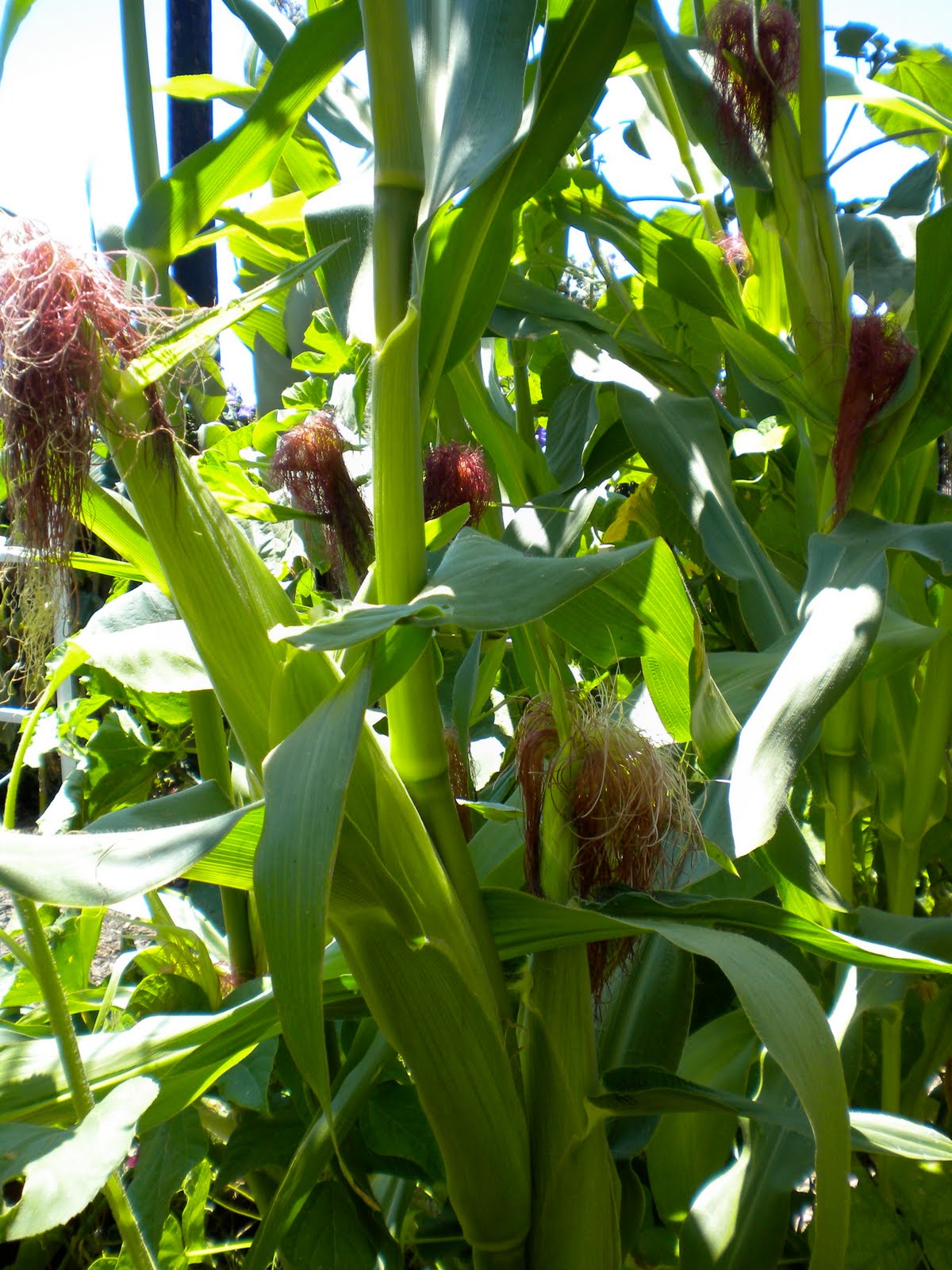
Corn - the husk should feel full, look for the plants silks to be dry and brown, greenish near the cob. Cut a slit in the husk to do the kernel test; pierce one kernel with your fingernail, if the liquid is clear it's not ready, if there is no liquid the corn is over-ripe and if there is milky liquid it's just right. Pick in the morning for ultimate sweetness.

Cucumber - look for the flowers to fall off of the cucumber, it should be dark green and large enough to use; pickling varieties should be 2-6" and slicing varieties should be 6-10".


Eggplant - the skin should be smooth and shiny but firm, most varieties will be more than 6", the smaller the eggplant the better the flavor.
 
Peppers - pick when peppers are big enough to use, certain peppers are not completely ripe until they turn their final color. If you pick certain peppers before they turn red that plant will continue to set new fruit.

  
Potatoes - new potatoes can start to be harvested anywhere from when the plant flowers to two weeks after the flowers have died. For non-flowering varieties this is about 10 weeks after planting.  Dig out a few new potatoes for that nights dinner and replace the soil. For your final harvest and storage potatoes dig up the plant carefully when it's dry and after the foliage has died back. Leave the potatoes out in the sun to dry for a couple of days.


Snap Beans - look for beans that are straight and thin as a pencil, pick in the morning (only if plant is dry) when they are at their sweetest. The seeds should be barely visible in the pod and it's tips should be soft.

Sweet Potato - usually ready 100-140 days after planting, harvest when plant dies down on dry days before the first frost. Be careful to avoid damaging your potatoes when harvesting and cure a week before storing. Rinse very gently if absolutely necessary.

Watermelon - look for the tendril nearest the fruit to turn from green to brown, also look for the bottom of the plant to yellow.

Winter Squash - look for the vine to die down and the stem to dry, the skin should be hard making it difficult to pierce with your fingernail. When cutting, leave 1" of stem. Buttercup and nut varieties taste better after sitting in the sun for two weeks after harvest as does Spaghetti Squash which is usually ripe when the stem cracks.

Saturday, May 15, 2010

Attack of the Potatoes


Okay recently in one corner of the garden I couldn't help but notice that everytime I turned around the potato plants seemed to be growing. I thought that it must just be a mistake because they were already bearing down on the 2 foot mark and the guide said they would be 1-2 feet tall. Mind you they started at the bottom of a 6 inch trench. I checked for flowers everyday as a sign that they were slowing down because frankly I just didn't allot that much space in the bed for the potatoes.

Well today they are just three inches shy of 3 feet tall and FINALLY a flower. I can only hope that this is some sort of signal that they have ceased their upward and outward takeover and will now focus on the actual potatoes. If anyone has found a way to send a message to your plants that that will be quite enough, there is no more room for you, please share. I have a couple more renegades that didn't seem to get the memo.

Thursday, May 13, 2010

Apartment Gardening-Top 10


Don't think that just because you live in a apartment you can't grow your own food. It's entirely possible to provide yourself with your favorite fruit and vegetables using your kitchen window, balcony, patio or rooftop and even hanging off your roof*! You will be surprised to learn that some of your favorites can even be grown inside (so long boring houseplants). First think about what you actually eat day to day and what is included in your favorite recipes. I'm just going to cover ten here but container gardening creates endless possibilities.

Dwarf Banana Plant-Can be grown inside, many different varieties
Cucumber*-Choose varieties with a more compact growth like bush champion or spacemaster, for growing upside down choose a slicing or pickling variety.
Herbs-Basil,Oregano,Rosemary-Probably the easiest to grow and will take up the least amount of space (except for rosemary). Perfect for a windowsill. Many wonderful dwarf varieties available.
Lettuce-Buttercrunch is a great variety that withstands heat as is Jericho. Pick the outside leaves for your salad or sandwich and it will continue to grow.
Dwarf Meyer Lemon Tree- Can be grown inside, near sun of course, the container and pruning keep it small, has a wonderful fragrance and flowers.
Peppers*-Many favorites like Jalapeno and Green Bell. Will need a sunny spot, choose pots a minimum of 12" deep.
Potatoes-These can get big so be prepared, one potato plant can take up a 5 gallon bucket but it can also give you up to 6-10 potatoes that you can harvest individually each night.
Squash-Look for smaller bush varieties.
Strawberries-Great for little to no extra space.
Tomatoes*-Half wine barrels are a good choice for indeterminate varieties, for those with a little less space choose dwarf varieties that are perfect for smaller containers.


No longer will you need to consider where you food came from and if it was sprayed with chemicals.

 For more great tips on apartment gardening visit: Life on the Balcony a great blog I came across.

Wednesday, May 12, 2010

Olivewood Gardens and Learning Center

Seeds in the City is so excited to be partnering with Olivewood Gardens this summer to provide seedlings for their urban garden.

Olivewood Gardens sits on a 1/2 acre in National City and they focus on education; connecting local communities to nature, educating them in the process.


Their mission is to reconnect students and families to the natural environment through food, education and community engagement.

We feel so lucky to share our seedlings with such an important group and the community. However Olivewood still needs your help in the form of fundraising, teaching, garden installation/maintenance, garden tools, kitchen supplies and of course monetary donations go directly to fund their very important work. To make a donation contact Amy Carstensen at 619-336-2253.

Website of the Week


Find out more and get involved here.

Tuesday, May 11, 2010

Saturday, May 8, 2010

Find Inspiration in a Garden Tour

The Bankers Hill/Mission Hills Garden Tour was today and I think I will let the pictures speak for themselves.